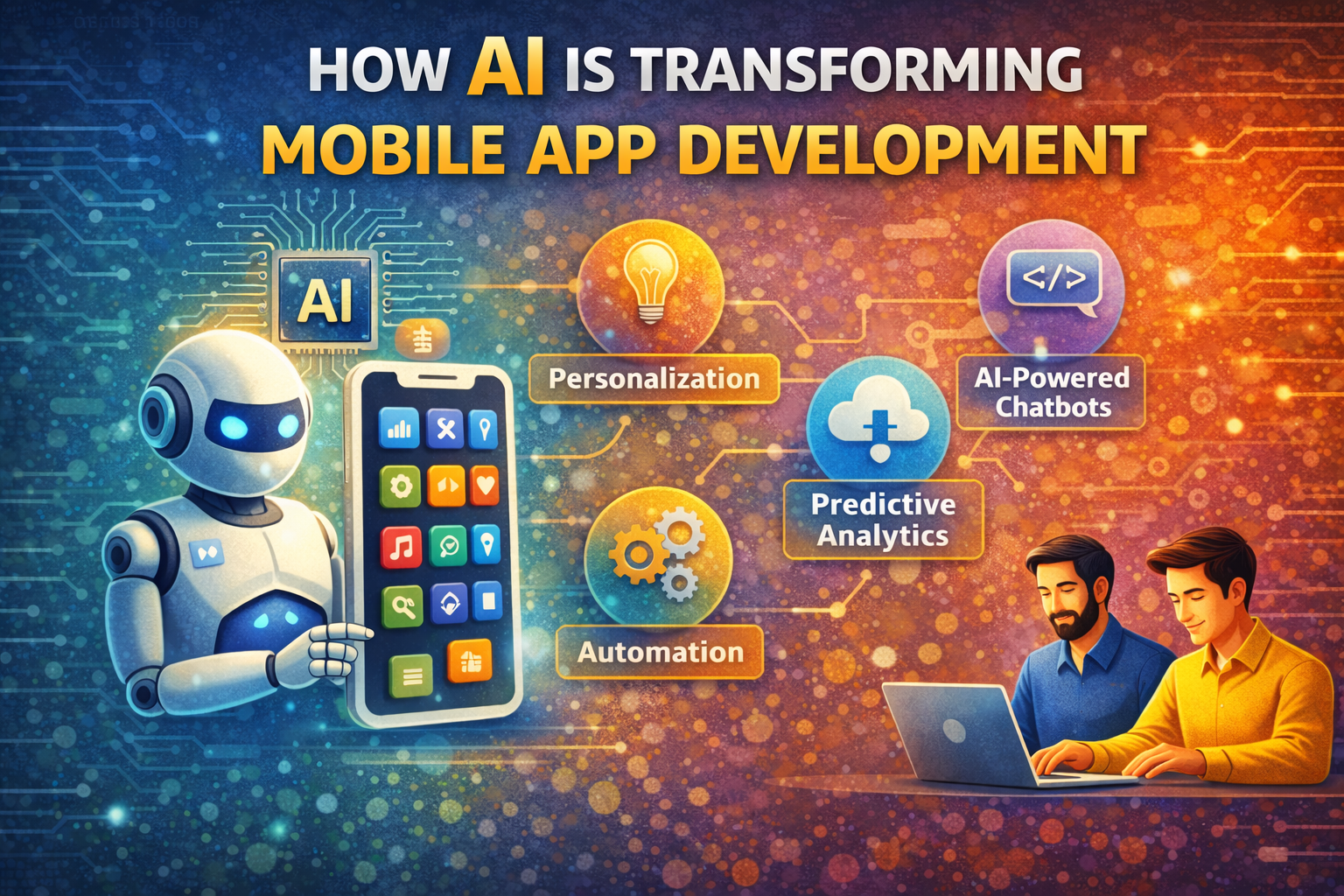
Artificial Intelligence (AI) is rapidly changing the way mobile applications are developed and used. From personalized recommendations to intelligent chatbots, AI is becoming an essential component of modern mobile apps. Businesses across industries are integrating AI-powered features into their applications to enhance user experiences, automate processes, and gain valuable insights from data.
The latest AI in mobile app development is helping companies build smarter, more efficient applications that adapt to user behavior and deliver highly personalized experiences. As AI technology continues to evolve, its role in mobile app development is expected to grow even further.
In this blog, we will explore how AI is transforming mobile app development, the benefits it offers, and the key AI-powered technologies that are shaping the future of mobile applications.
Understanding AI in Mobile App Development
Artificial Intelligence refers to the ability of machines or software systems to perform tasks that typically require human intelligence. These tasks may include learning from data, recognizing patterns, understanding natural language, and making decisions.
In mobile app development, AI is used to enhance the functionality and intelligence of applications. AI-powered apps can analyze large amounts of user data, predict behavior, and deliver personalized experiences. These technologies allow mobile applications to become more intuitive, efficient, and user-friendly.
Some common AI capabilities used in mobile apps include:
Machine learning
Natural language processing
Image recognition
Voice recognition
Predictive analytics
Why AI Is Important for Mobile App Development
The demand for smarter mobile apps is increasing rapidly. Users expect apps to understand their preferences, respond quickly, and provide personalized recommendations. By integrating the latest AI in mobile app development, businesses can improve user engagement and create more valuable digital experiences.
AI helps meet these expectations by enabling applications to:
Learn from user behavior
Provide intelligent suggestions
Automate repetitive tasks
Improve app security
Deliver better customer support
Key Ways AI Is Transforming Mobile App Development
1. Personalized User Experiences
One of the biggest advantages of AI in mobile applications is the ability to deliver personalized experiences. AI algorithms analyze user data such as browsing history, preferences, and behavior to provide customized content and recommendations. By integrating the latest AI in mobile app development, businesses can improve user engagement and create more valuable digital experiences.
For example:
Streaming apps recommend movies based on viewing history
Shopping apps suggest products based on previous purchases
News apps deliver personalized news feeds
2. AI-Powered Chatbots and Virtual Assistants
Customer service is another area where AI is making a significant impact. AI-powered chatbots can provide instant responses to user queries and assist customers without human intervention. Virtual assistants integrated into mobile apps can also help users perform tasks such as setting reminders, searching for information, or navigating app features.
Benefits of AI chatbots in mobile apps include:
24/7 customer support
Faster response times
Reduced operational costs
Improved customer satisfaction
3. Voice Recognition Technology
Voice recognition is becoming increasingly popular in mobile applications. AI-powered voice assistants allow users to interact with apps through voice commands rather than typing. This technology enhances user convenience and improves accessibility.
Voice recognition technology is widely used in:
Smart home control apps
Navigation apps
Voice search features
Accessibility tools for people with disabilities
4. Image and Facial Recognition
AI-powered image recognition technology enables mobile apps to identify objects, people, and patterns in images. For example, some shopping apps allow users to upload a picture of a product and find similar items instantly.
This technology improves both security and user experience.
Common uses of image recognition in mobile apps include:
Facial recognition for secure login
Photo organization and tagging
Augmented reality features
Visual product search
5. Predictive Analytics
Predictive analytics uses machine learning algorithms to analyze data and predict future outcomes. In mobile apps, predictive analytics helps businesses anticipate user needs and provide proactive solutions. By leveraging predictive analytics, businesses can improve customer engagement and increase conversions.
For example:
Fitness apps predict workout routines based on user progress
Financial apps analyze spending patterns and offer budgeting advice
E-commerce apps predict which products users are likely to purchase
6. Enhanced Mobile App Security
Security is a major concern in mobile applications, especially when dealing with sensitive user data. AI is helping improve app security by detecting unusual patterns and potential threats. These features help protect user data and reduce the risk of cyberattacks.
AI-powered security features include:
Fraud detection systems
Biometric authentication
Behavioral analysis for suspicious activities
Automated threat detection
7. Smart Search and Recommendation Systems
AI-powered search engines provide more accurate and relevant results by understanding user intent and context. Smart recommendation systems increase user engagement and encourage users to spend more time on the app.
For example:
E-commerce apps use AI to improve product search results
Music apps recommend songs based on listening habits
Travel apps suggest destinations based on past searches
8. Automation in App Development
AI is not only transforming how apps function but also how they are developed. AI-powered tools are helping developers automate various aspects of the development process. Automation helps developers build applications faster while maintaining high quality.
These tools can assist with:
Code generation and optimization
Bug detection and debugging
Automated testing
Performance monitoring
Benefits of AI in Mobile App Development
Integrating AI into mobile applications offers several advantages for businesses and users.
Improved User Engagement
AI-powered personalization and recommendations keep users engaged and encourage them to spend more time on the app.
Better Decision Making
AI can analyze large amounts of data and provide insights that help businesses make informed decisions.
Increased Efficiency
Automation reduces manual tasks and streamlines business operations.
Enhanced Security
AI-powered security systems help detect and prevent cyber threats more effectively.
Competitive Advantage
Businesses that adopt the latest AI technologies can stand out in the highly competitive mobile app market.
Industries Using AI-Powered Mobile Apps
AI-powered mobile applications are being used across a wide range of industries.
Healthcare
AI-powered apps help doctors diagnose diseases, monitor patients remotely, and analyze medical data.
E-Commerce
Online shopping apps use AI for product recommendations, customer support, and personalized marketing.
Finance
Banking and finance apps use AI for fraud detection, credit scoring, and automated financial advice.
Education
Educational apps use AI to personalize learning experiences and track student progress.
Travel and Hospitality
Travel apps use AI to recommend destinations, optimize routes, and provide real-time travel updates.
Future of AI in Mobile App Development
These innovations will make mobile apps even smarter and more interactive.
Businesses that invest in AI-powered mobile apps today will be better prepared for the digital future. The role of AI in mobile app development will continue to grow as technology advances. Some emerging trends include:
AI-powered voice interfaces
Advanced natural language processing
Real-time AI analytics
Integration with wearable devices
AI-driven augmented reality experiences
Conclusion
Artificial Intelligence is transforming the mobile app development landscape by enabling smarter, more personalized, and highly efficient applications. The latest AI in mobile app development allows businesses to automate processes, improve customer experiences, and gain valuable insights from data.
From AI-powered chatbots and voice recognition to predictive analytics and advanced security systems, AI technologies are reshaping how mobile apps function and interact with users. As AI continues to evolve, its impact on mobile app development will become even more significant.
For businesses looking to stay competitive in the digital marketplace, integrating AI into mobile applications is no longer optional—it is essential. Partnering with an experienced development company like Xoviontech can help businesses leverage the power of AI to build innovative mobile applications that deliver exceptional performance and user experiences.