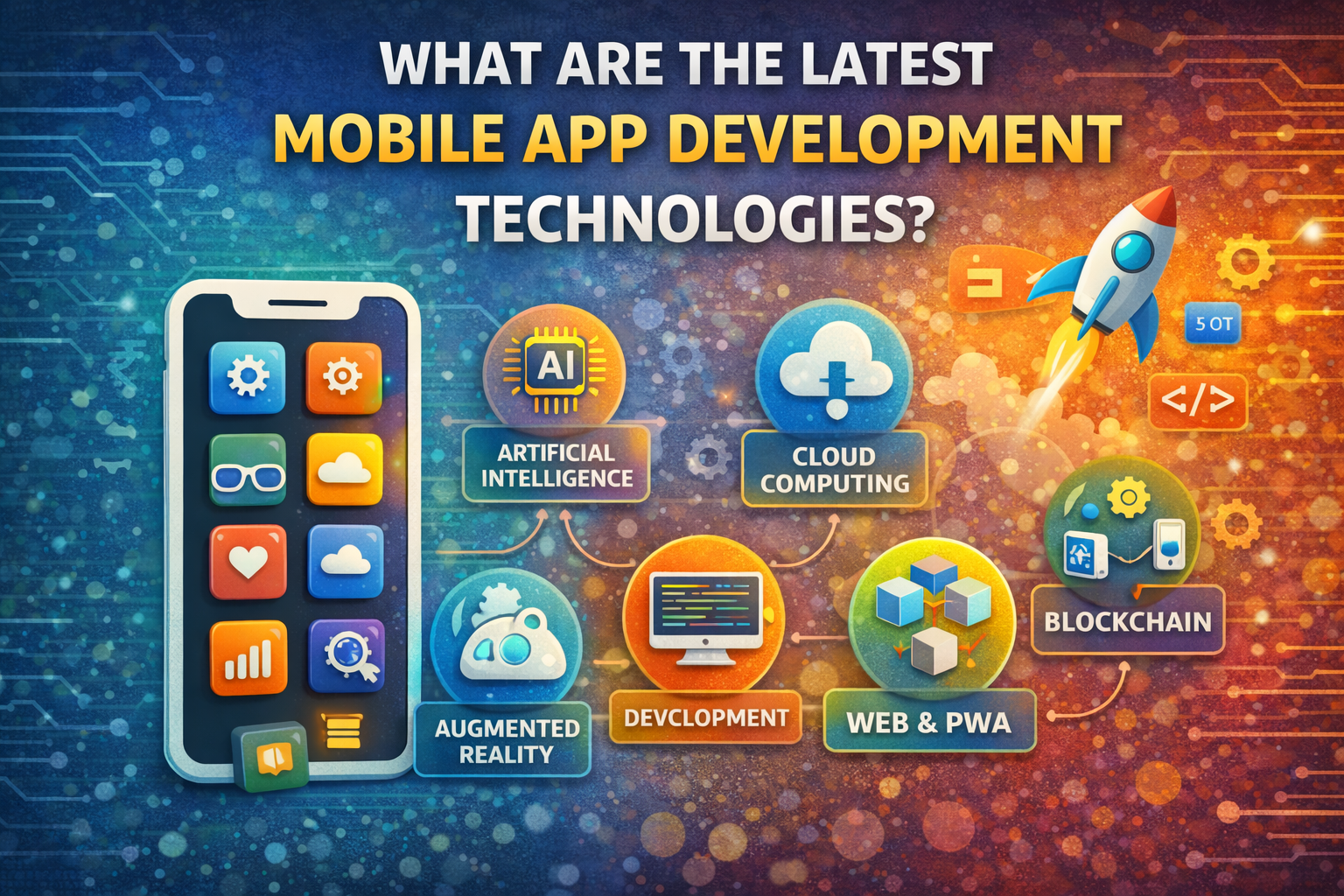
Mobile applications have become a vital part of modern business strategies. From shopping and banking to education and healthcare, mobile apps help businesses connect with customers, streamline services, and improve user engagement. As technology continues to evolve, mobile app development is also advancing rapidly with new tools, frameworks, and innovations that enhance functionality and user experience.
Businesses that want to stay competitive must stay updated with the latest mobile app development technologies. These technologies help developers build faster, smarter, and more efficient applications that meet the expectations of modern users.
In this blog, we will explore the latest mobile app development technologies, how they are transforming the mobile industry, and why businesses should consider adopting them.
Why Mobile App Development Technologies Are Evolving
The mobile app industry is constantly evolving due to several factors such as increasing smartphone usage, changing user expectations, and advancements in digital technologies. Users today expect mobile applications to be faster, smarter, and more personalized. These factors are pushing developers to adopt modern technologies that enhance app capabilities and deliver better results.
To meet these expectations, developers are adopting innovative technologies that improve performance, security, and scalability.
Some of the key drivers of technological advancements in mobile app development include:
Growing demand for personalized user experiences
Increased reliance on cloud-based services
Integration of artificial intelligence and machine learning
Expansion of smart devices and IoT
Rising need for stronger cybersecurity measures
Latest Mobile App Development Technologies to Watch
1. Artificial Intelligence (AI) and Machine Learning
Artificial intelligence and machine learning have become some of the most influential technologies in mobile app development. These technologies allow apps to analyze data, learn from user behavior, and provide personalized experiences. For example, AI-driven chatbots can provide instant customer support, reducing the need for human intervention. Machine learning algorithms can also analyze user behavior to deliver tailored suggestions and services.
AI-powered apps are becoming increasingly popular because they improve user engagement and enhance overall functionality.
Many modern mobile applications use AI-powered features such as:
Voice assistants
Chatbots for customer support
Personalized content recommendations
Image recognition
Predictive search results
2. Cross-Platform App Development
Cross-platform development frameworks have transformed the way developers build mobile applications. Instead of creating separate apps for Android and iOS, developers can now write a single codebase that works across multiple platforms. For businesses looking to launch apps quickly and efficiently, cross-platform development has become a highly attractive option.
Popular cross-platform frameworks include:
Flutter
React Native
Xamarin
These frameworks offer several advantages, including:
Faster development time
Reduced development costs
Consistent user experience across platforms
Easier maintenance and updates
3. Internet of Things (IoT) Integration
The Internet of Things (IoT) refers to the network of connected devices that communicate and share data through the internet. IoT technology has opened up new possibilities for mobile app development. For example, a mobile app can allow users to control lighting, temperature, and security cameras in their homes from anywhere in the world.
As IoT devices continue to grow in popularity, mobile apps will play an increasingly important role in managing connected ecosystems.
Mobile apps are now being used to control and monitor smart devices such as:
Smart home appliances
Wearable fitness devices
Healthcare monitoring systems
Smart security systems
4. Augmented Reality (AR) and Virtual Reality (VR)
Augmented reality and virtual reality are revolutionizing mobile app experiences by creating immersive digital environments.
AR technology overlays digital elements onto the real world, while VR creates fully immersive virtual environments. For example, AR-powered shopping apps allow users to visualize how furniture or clothing will look before purchasing. Real estate apps use VR to provide virtual property tours.
As smartphone hardware becomes more advanced, AR and VR technologies will continue to grow in mobile app development.
These technologies are widely used in industries such as:
Gaming
Retail and e-commerce
Real estate
Education
Healthcare
5. Cloud-Based Mobile Applications
Cloud computing has significantly transformed mobile app development by providing scalable and efficient data storage solutions. Cloud integration also allows developers to quickly update apps and deploy new features without requiring users to download large updates.
Cloud-based mobile apps store and process data on remote servers instead of relying solely on the device’s hardware. This approach offers several advantages:
Improved performance
Reduced storage requirements on devices
Real-time data synchronization
Enhanced scalability
6. Blockchain Technology
Blockchain technology is becoming increasingly popular in mobile app development due to its high level of security and transparency.
Originally developed for cryptocurrency transactions, blockchain is now used in various industries such as finance, healthcare, and supply chain management. Blockchain-powered apps are particularly useful for financial services, digital identity verification, and secure payment systems.
Key benefits of blockchain in mobile apps include:
Secure data transactions
Transparent record keeping
Protection against fraud
Decentralized data management
7. 5G Technology
The rollout of 5G networks is expected to significantly impact mobile app development. With faster internet speeds and lower latency, 5G enables mobile apps to deliver better performance and more advanced features. With 5G connectivity, developers can create more complex and data-intensive applications without compromising performance.
Benefits of 5G technology include:
Faster data transfer speeds
Improved streaming quality
Real-time data processing
Enhanced support for AR and VR applications
8. Progressive Web Apps (PWAs)
Progressive Web Apps combine the best features of mobile apps and websites. These applications are accessed through web browsers but function like native mobile apps. PWAs are particularly useful for businesses that want to provide app-like experiences without requiring users to download a separate mobile application.
Key advantages of PWAs include:
No need for installation from app stores
Faster loading times
Offline functionality
Lower development costs
How Businesses Benefit from Modern Mobile App Technologies
Adopting the latest mobile app development technologies offers numerous benefits for businesses.
Enhanced User Experience
Modern technologies allow developers to create interactive and personalized user experiences that increase customer satisfaction.
Improved Efficiency
Automation, cloud integration, and AI-powered tools help streamline operations and improve productivity.
Increased Security
Technologies such as blockchain and advanced encryption methods help protect sensitive user data.
Better Scalability
Modern development frameworks allow businesses to expand their applications as their user base grows.
Competitive Advantage
Companies that adopt innovative technologies are better positioned to stand out in the competitive mobile app market.
Future Trends in Mobile App Development
The mobile app development industry will continue to evolve as new technologies emerge.
Some trends that are expected to shape the future of mobile apps include:
AI-powered automation and intelligent assistants
Voice-enabled applications
Edge computing for faster processing
Advanced cybersecurity solutions
Integration with wearable and smart devices
Businesses that stay updated with these trends will be better prepared to meet future customer demands.
Conclusion
Mobile technology is evolving rapidly, and businesses must adapt to stay competitive in the digital marketplace. The latest mobile app development technologies—including artificial intelligence, cross-platform frameworks, IoT integration, blockchain, cloud computing, and 5G—are transforming the way mobile applications are designed and developed.
These technologies enable developers to build smarter, faster, and more scalable applications that provide exceptional user experiences. By adopting modern development tools and innovative solutions, businesses can create powerful mobile apps that drive growth and customer engagement.
If you are planning to build a mobile application using the latest technologies, working with an experienced development partner can make a significant difference. A reliable technology company like Xoviontech can help you leverage modern mobile app development technologies to create innovative and high-performing applications tailored to your business needs.