In today’s digital era, businesses are constantly looking for ways to improve efficiency, enhance customer engagement, and stay competitive in the market. One of the most effective ways to achieve these goals is through custom app development. Unlike off-the-shelf applications, custom apps are specifically designed to meet the unique requirements of a business.
Whether it’s a mobile application for customers, an internal tool for employees, or a platform that manages business operations, custom apps allow companies to create solutions tailored to their specific needs. However, building a custom application requires a well-structured development process to ensure the final product is reliable, scalable, and user-friendly.
In this blog, we will explore the process of custom app development, including the key stages involved and how businesses can benefit from investing in customized solutions.
What Is Custom App Development?
Custom app development refers to the process of designing, developing, and deploying software applications specifically tailored to the needs of a particular business or organization.
Unlike generic software solutions, custom applications are created with unique features, workflows, and integrations that align with a company’s goals. Because these applications are built from scratch, businesses have full control over the functionality, design, and scalability of the system.
Custom apps are commonly used for:
Customer relationship management (CRM) systems
Inventory management tools
E-commerce platforms
Mobile applications for customers
Enterprise resource planning (ERP) solutions
On-demand service platforms
Why Businesses Choose Custom App Development
Before exploring the development process, it’s important to understand why many businesses prefer custom applications over ready-made solutions.
Tailored Functionality
Custom apps are built according to the specific requirements of a business. This ensures that the application includes only the features that are truly needed.
Better Scalability
As businesses grow, their software needs also evolve. Custom applications can easily be updated or expanded to accommodate new features and increased user demand.
Enhanced Security
Custom apps can be designed with advanced security features that protect sensitive business and customer data.
Competitive Advantage
A unique application with specialized functionality can give businesses an edge over competitors using generic software solutions.
Key Stages in the Custom App Development Process
Developing a custom application involves several stages. Each phase is crucial in ensuring the success of the final product.
1. Requirement Analysis and Idea Validation
The first stage of custom app development involves understanding the business requirements and validating the app idea. This step helps define the purpose of the application and identify the problems it aims to solve. Market research and competitor analysis may also be conducted to ensure the app idea is viable and competitive.
A clear understanding of requirements helps create a strong foundation for the development process.
During this stage, the development team typically works closely with stakeholders to gather important information such as:
Business goals and objectives
Target audience
Key features and functionalities
Budget and timeline expectations
2. Project Planning and Strategy
Once the requirements are defined, the next step is planning the project. This stage involves creating a roadmap that outlines the entire development process. A well-planned strategy ensures that the project remains organized and progresses smoothly.
Key elements of project planning include:
Defining the development timeline
Choosing the appropriate technology stack
Deciding on the platform (Android, iOS, web, or cross-platform)
Allocating development resources
3. UI/UX Design
User interface (UI) and user experience (UX) design are essential for creating applications that are both functional and visually appealing.
During the design phase, designers focus on building an intuitive layout that makes it easy for users to navigate the app. Wireframes act as blueprints that outline the structure of the app, while prototypes provide interactive previews of how the app will function.
A well-designed application improves usability and increases user satisfaction.
The design process typically includes:
Wireframing
Prototyping
User journey mapping
Visual design creation
4. App Development
Once the design is finalized, developers begin building the application. This stage involves writing the code that powers the app’s functionality.
Custom app development generally includes two main components:
Frontend Development
Frontend development focuses on the parts of the application that users interact with directly. This includes:
User interface elements
Navigation systems
Visual components
Frontend developers ensure that the app is responsive and provides a seamless user experience.
Backend Development
Backend development handles the server-side operations of the application. This includes:
Databases
Application logic
APIs
Server infrastructure
The backend ensures that the application can store and process data efficiently.
5. Integration of Third-Party Services
Many custom applications require integration with external services or tools. These integrations enhance the functionality of the app and provide additional capabilities.
Common third-party integrations include:
Payment gateways
Social media platforms
Cloud storage services
GPS and location tracking systems
Email and messaging services
These integrations help businesses deliver a more comprehensive user experience.
6. Testing and Quality Assurance
Testing is a critical stage in the custom app development process. Before launching the application, developers must ensure that it works correctly and provides a smooth user experience.
Testing helps identify and fix bugs, ensuring that the final application is stable and reliable. Quality assurance teams perform multiple types of testing, including:
Functional testing
Performance testing
Security testing
Compatibility testing
Usability testing
7. Deployment and Launch
Once the application has been thoroughly tested, it is ready for deployment. During this stage, the app is released to users through platforms such as app stores or company servers. After approval, the application becomes available for users to download and start using.
The deployment process may include:
Preparing app store listings
Uploading the app to distribution platforms
Completing app store review processes
8. Maintenance and Continuous Improvement
Custom app development does not end after the launch. Regular maintenance and updates are necessary to ensure that the application continues to perform well. Continuous improvement helps keep the application relevant and competitive in the market.
Maintenance activities may include:
Fixing bugs and technical issues
Updating security systems
Adding new features
Improving performance
Technologies Used in Custom App Development
The technologies used in custom app development depend on the platform and project requirements. Selecting the right technology stack is essential for building scalable and efficient applications.
Some commonly used technologies include:
Programming languages: Java, Kotlin, Swift, Python, JavaScript
Frameworks: Flutter, React Native, Angular, Node.js
Databases: MySQL, PostgreSQL, MongoDB
Cloud platforms: AWS, Google Cloud, Microsoft Azure
Benefits of Following a Structured Development Process
A well-defined custom app development process offers several advantages for businesses.
Improved Project Management
Structured workflows ensure that every stage of development is completed efficiently.
Higher Quality Applications
Proper planning, testing, and design lead to applications that perform reliably.
Reduced Development Risks
Identifying potential issues early helps avoid delays and costly fixes.
Better User Experience
A structured process ensures that the final product meets user expectations and business goals.
Conclusion
Custom applications have become a powerful tool for businesses looking to improve efficiency, deliver better services, and gain a competitive advantage. Unlike generic software solutions, custom app development allows organizations to create applications specifically designed to meet their unique requirements.
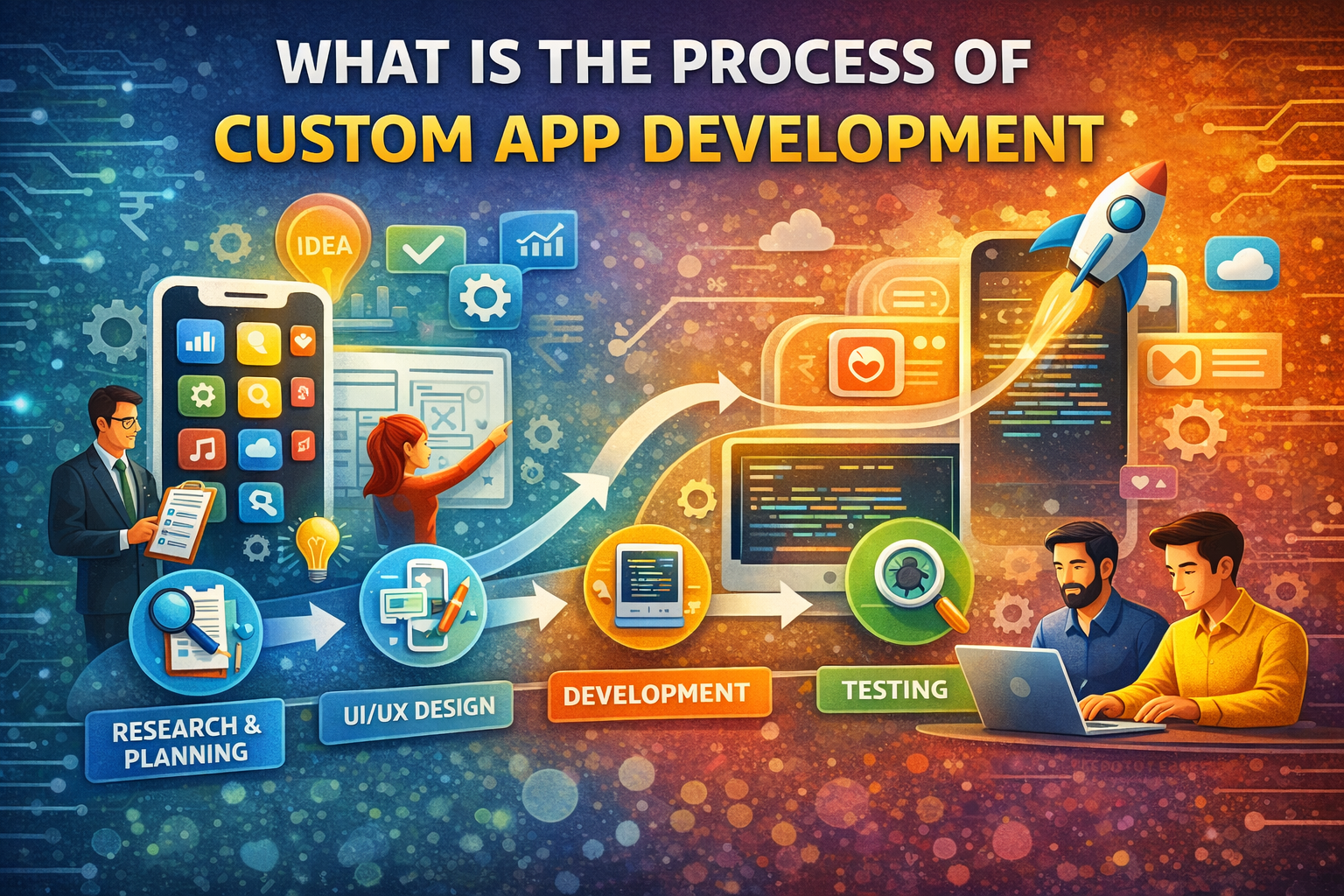
The custom app development process involves multiple stages, including requirement analysis, project planning, design, development, testing, deployment, and ongoing maintenance. Each stage plays an important role in ensuring the success of the final product.
By following a structured development process and working with experienced developers, businesses can build scalable and secure applications that support long-term growth. If you are planning to develop a custom application tailored to your business needs, partnering with a trusted development company like Xoviontech can help transform your idea into a powerful digital solution.